Learn vital new skills using our Change capability framework, development pathways and member resources.
Gain respect and recognition throughout your career, with our three-level Accreditation Program.




Change is everywhere and an everyday part of life. At the Change Management Institute, we are a vehicle of change; we are the voice of change management and we are your voice in our profession. We help you excel and stay at the top of your game, constantly learning and adapting as the profession itself evolves.

Learn from the best on how to kickstart your career as a change management professional

For the experienced change management professional looking to hone their skills even further

For the highly-experienced change manager wanting to perfect their skills at the top of their game

AI is reshaping how organisations work, but the biggest barrier to successful adoption isn’t the technology. It’s leadership.
Join Change Management Institute CEO Steffi Jackson for a live conversation with Dr Dorottya Sallai, Associate Professor of Management at LSE and AI Leadership & Change expert. Dr Sallai is the Education and Assessment Innovation Lead at LSE’s Department of Management and Chair of LSE’s AI Working Group. Her research sits at the intersection of management, politics, AI, and education, and she advises organisations including the European Commission on navigating institutional change.
In this session, we will explore:
Bring your questions. There will be time for live Q&A.
This is a member exclusive event.
Become a member and attend this and every global event free, with access to exclusive resources, professional development and a global community of change practitioners. Explore member benefits.
Change doesn’t fail because of a lack of strategy. More often, it falters because we underestimate the human side of change, particularly when leading across cultures, departments and borders.
In this engaging and practical session, Victoria Rennoldson explores how cultural differences and behavioural preferences shape the way people interpret uncertainty, build trust and respond to pressure and delays.
You’ll discover how Cultural Intelligence and adapting your communication can help you reduce resistance, strengthen stakeholder engagement and influence change more effectively.
You’ll leave with practical tools to lead change in diverse teams, wherever they are in the world.
Are you new to the Change Management Institute? Join us for this virtual event to:
All global members are welcome, we look forward to meeting you!

Welcome to the summary of our Futures of Change research initiative. This report provides a snapshot of what was explored and a summary of our high-level findings. This initiative was the first of its kind for the Change Management Institute. It invites us all to expand the lens through which we currently view change, and to open our minds to the alternatives and possibilities presented by the research.
The report invites you into a different kind of conversation. It’s not a forecast, a best-practice guide, or a roadmap for certainty. It’s a space for curiosity. A provocation. A shared inquiry into what change could become, and what change professionals, adjacent roles and next generation leaders might need to navigate what’s next.
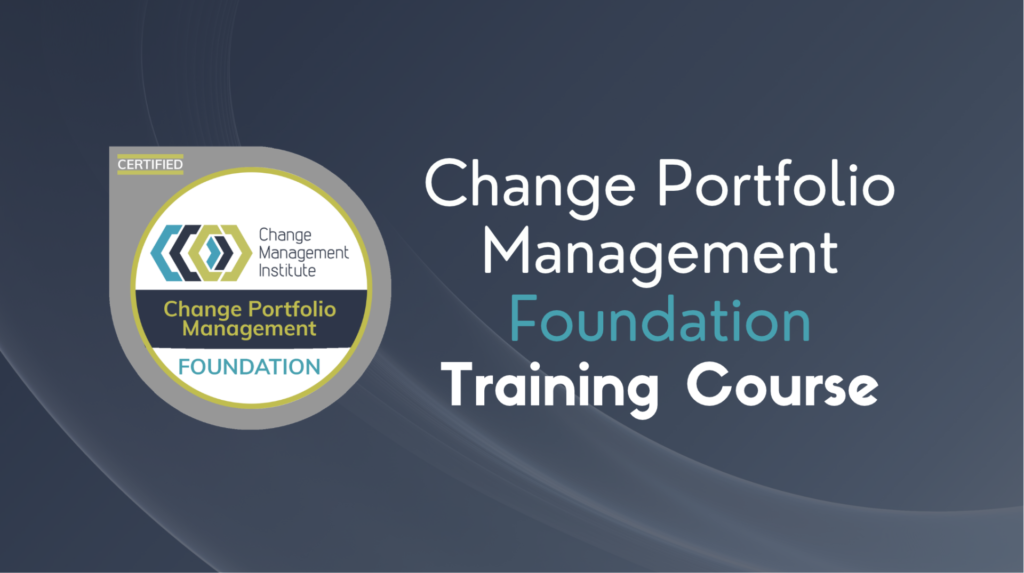
Our new transformational Change Portfolio Management (CPM) training course will equip you with the essential skills and knowledge to apply CPM principles and techniques to drive successful change execution.
The course will introduce you to foundational concepts of CPM through discussions, interviews with experts, self-reflection, and group activities. The training is delivered over 4 consecutive half-days.
Great news: you can bundle purchasing the CPM Foundation Training Course and the CPM Advanced Training Course – just click on the register buttons to proceed.
Helped me to understand how to drive some of the harder conversations with decision making audiences, as well as giving that helicopter view needed to support those conversations vs getting too stuck in the detail of individual initiatives.
Very relevant content and I think it’s highly applicable too. I’m glad I’m investing myself to do this course now 🙂
Have already set up a meeting for my project director about how we manage change across a branch. Plus have shared the risks – they are gold! I will be adding to my LinkedIn and CV tonight!
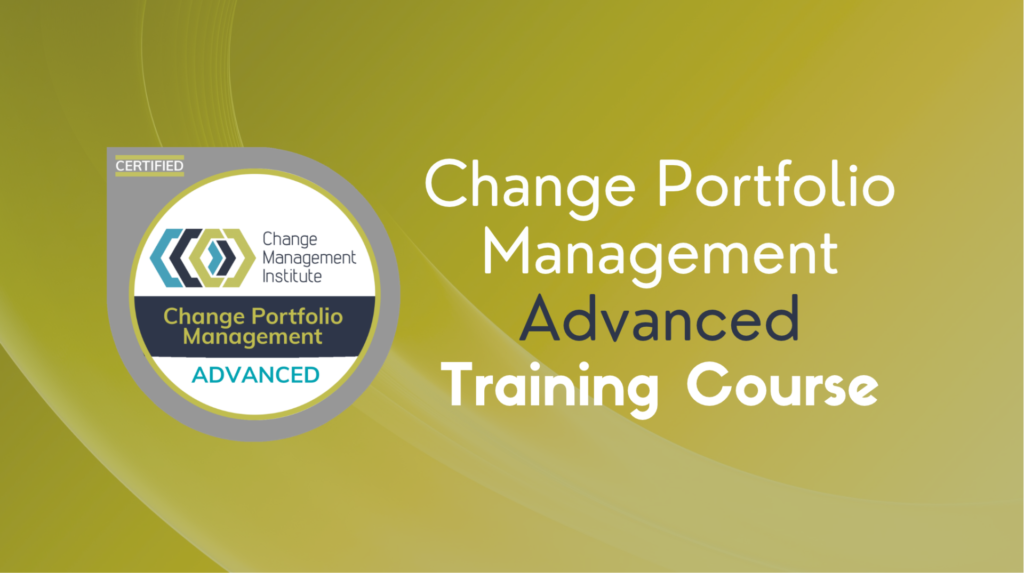
Pre-requisites
This course assumes prior knowledge regarding change management concepts and change/project delivery language. Participants must:
I feel like I have the tools, theory and practical examples to take our CPM approach from infancy to adulthood (or at least teenager!) and be able to demonstrate the benefits of doing so to leadership and program delivery colleagues.
I particularly enjoyed the section on storytelling and creating that change narrative for the portfolio to inspire and refocus people.
The small group setting for this course was very helpful in enriching the discussion and building connections.