Build cultural intelligence through drive, knowledge, strategy and action
You can be very clear on the strategy and the plan, yet when it comes to engaging people and getting them to act, there is a disconnect. Often this happens because teams communicate and operate in different ways from the way we are used to, and the resistance that follows can be open or hidden.
Victoria Rennoldson is passionate about global leadership and about how people communicate, connect and understand each other across cultures. Here is how she helps Change Managers spot hidden resistance and respond to it.
Learning the new rules of the road
At a pedestrian crossing in Ho Chi Minh City, with cars and motorbikes coming from every direction and nobody stopping, it takes Victoria about 10 minutes to work out what to do. By observing, she realises that people step into the road and cross confidently and steadily. They never run, hesitate or stop suddenly.
She was trying to navigate by what she saw as the “normal” way, and it was not working because the culture had shifted. The same happens when we join a new team, start a new project or work with people very different from ourselves. The rules of the road have changed, and we have not noticed.
Culture in the broadest sense
When we are under pressure or things feel uncertain, we default to the patterns of behaviour and communication that are most familiar to us. Those patterns come from culture, and culture is not only national. It also differs across generations, departments and functions.
Culture shapes what we think is the “normal” way to engage, including:
- How we come into meetings and who speaks first
- Who has the most dominant voice in the room
- How formal or informal we are
- How people get to know each other, or whether they keep their personal lives private
Cultural intelligence (CQ) is a capability, not just awareness or knowledge. We can measure it and develop it over time, and it affects how people build the trust and relationships that change depends on.
Hidden signals: resistance isn’t always loud
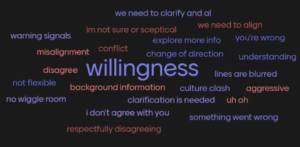 Sometimes resistance shows up as silence, and that silence may mean something else. A Brazilian finance director Victoria worked with had a great relationship with his US counterparts. When his role expanded to the UK, he found it hard to tell whether people meant yes, no or maybe, and he began holding conversations before and after meetings to understand what people really thought.
Communication style is one of the biggest causes of miscommunication in change initiatives. Consider the phrase “We need to have a conversation about that.” It might signal support, a problem, blame or a polite, indirect way of disagreeing.
Know yourself, read the room
Victoria uses a behavioural preferences map to help people understand their own culture first, then the team’s. It places you along spectrums rather than in either/or boxes. Four dimensions shape how teams respond when deadlines are tight and people disagree:
- Being and doing. Pushing forward with action, or pausing to reflect on implications first
- Collectivism and individualism. Consulting others before moving, or working autonomously and sharing an opinion straight away
- Uncertainty avoidance. Managing risk closely with backup plans, or experimenting and learning as you go
- Direct and indirect communication. Saying exactly what you mean, or choosing the right moment and people so the message lands without feeling like opposition
There is no right or wrong in these preferences, although there may be a right or wrong for the situation. The map gives teams a non-judgemental language to diagnose where a cultural clash is happening and why.
Clashes are not only a team spirit issue. Over time they erode trust, trigger extra alignment meetings and delay projects, and in the worst case they stop projects altogether.
Three strategies for navigating hidden influence
1. Navigate hidden resistance with three questions
- What am I hearing? What are the actual words people are saying?
- What is not being said? This matters especially with indirect communicators
- Is there another way to interpret this? When you feel tension, hit the pause button and consider another way to understand the behaviour
2. Make the invisible explicit
We often assume everyone shares our rules of the road. Put them on the table and agree how meetings run, how you will disagree, which channels you will use, when people are contactable and what response times to expect. Writing it down makes a big difference, and an external facilitator can help bring the elephant in the room to the table.
3. Extend your CQ range
Extending your range is like starting a new kind of exercise. It hurts at first and gets easier with practice. It draws on four capabilities of cultural intelligence:
- CQ drive. Staying curious and engaged, even when it is stressful
- CQ knowledge. Understanding how we are similar to and different from the people we work with
- CQ strategy. Anticipating cultural impacts and planning what to change in the meeting or approach
- CQ action. Deciding what you change, in what you say or how you say it
If pushed to choose one, Victoria says action, because it is the only part the people you work with can see and hear.
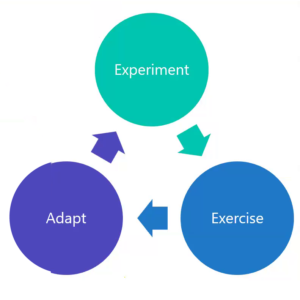 Experiment, exercise, adapt
You do not need massive changes. Think of a situation where you are getting hidden resistance and choose one small action to try, in what you say or how you say it. Put it into play, then adapt based on what works. Ask yourself:
- What are you assuming about the other people?
- Where might you need greater cultural intelligence range?
- What is one small thing you could do differently?
Why this matters for Change Managers
For everyone working in Change Management, at whatever level, cultural intelligence is critical for success. Think about how you might change your meetings, or a situation that has been challenging for you.
🎬 Members can watch the recording on the MEMBER HUB
🤔 Not a member yet? Now is a great time to JOIN HERE NOW