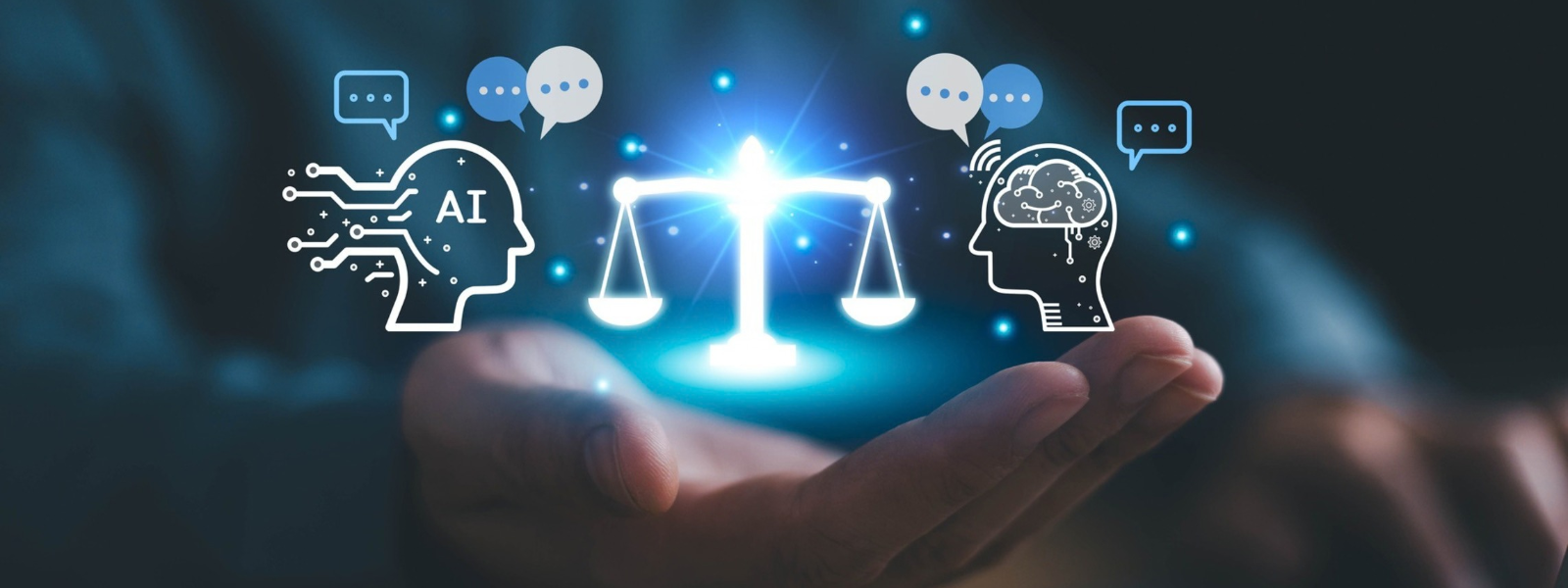
Holding people at the center as AI accelerates change, decisions and workloads.
We are joined by Professor Julie Hodges and Hilary Scarlett, with Barry Eustance as moderator, for a panel on how AI is reshaping organisations, work and decision making, how people experience and respond to accelerating change, and what neuroscience tells us about leading through uncertainty.
- Professor Julie Hodges is a professor of organisational change at Durham University in the UK and a leading expert on the role and impact of people during transformations. Her books include Managing and Leading People Through Change.
- Hilary Scarlett is an international speaker, consultant and author on Change Management and neuroscience, bringing the work of neuroscientists out of the lab and into the workplace. Her books include Brain Power at Work and Neuroscience for Organizational Change.
- Barry Eustance is the founder of The Sixsess Consultancy, host of the Just Great People podcast and author of Executive Decision Acceleration: Enhancing Judgment Under Pressure, a Field Guide.
The real question is how humans and AI work together
 There is a perception that change is accelerating, driven partly, though not only, by AI. Technology has always evolved, from the railways of the Industrial Revolution to the internet and the iPhone, and each time we have adapted. What stands out now is a sense that AI is driving what humans do. The focus belongs on how we use AI to augment the work we do, with real support in organisations:
- Development and training so people can use AI effectively, rather than having it dumped on them
- Upskilling people so they can adapt to the change they are facing
- A psychologically safe environment where people can raise any issues or concerns about using AI
AI is here to stay, whether we like it or not. What matters is how, as humans, we work in partnership with it.
People change quickly when they know why
As human beings, we can adapt incredibly quickly when we have to. Think back to spring 2020 and COVID. When people know why they have to adapt, they can change really quickly, which makes a sense of purpose so important.
Change takes energy, and the human brain is constantly trying to conserve it. It is also important to acknowledge what we are asking people to let go of, because our brains are very sensitive to loss. Taking time to acknowledge that matters before people move on and embrace the future.
Flipping change fatigue into change energy
Whatever the change, whether technology or a restructure, it must not negatively impact people’s wellbeing. Where change gets a bad name is where it affects people’s stress levels, and that ultimately leads to burnout. Three areas to focus on:
- Prioritise the change, rather than treating AI as the latest thing everybody has to have, and look at whether it is right for the business before implementing it
- Give people time to step back, rest and recuperate
- Make sure people have the skills to adapt to the changes they are being asked to implement
Rest is not the opposite of work, it is an integral part of it. Going from meeting to meeting on Zoom or Teams leaves our brains frazzled, and frazzled brains cannot learn. Managing our mental energy is how we flip it back into energy for change.
Speed and people-centric change are not in tension
If we feel change is being imposed upon us, most of us dig our heels in. Even small amounts of control or involvement make a big difference, because when we feel we have had some influence over the change, we feel more ownership of it. Leaders must be honest about when they are genuinely involving people and when a decision has already been made.
Leaders are making decisions at a faster rate, but speed and people-centric change are not genuinely in tension. Research shows that:
- People involved as early as possible in change are much more likely to be engaged in implementing it and ensuring it succeeds
- Early involvement has an impact on job satisfaction and morale
- People involved early are more likely to stay with the organisation
Picture a triangle: the technology driving change, the process for change and, vitally, the people element. Many organisations focus on the technology and the process, and not enough on people. That is where the spotlight belongs.
How AI can practically help Change Managers
There are now tools for gathering and analysing data, doing the diagnostic work to find root causes, and carrying out stakeholder analysis. These tools can take away some of the grind work, which frees managers to focus on the people-centric side of change. As AI takes away some of the more mundane decision making, the decisions that fall to managers and leaders are the more difficult ones, so anything that helps with that is valuable.
Is there a human speed limit to change?
 The brain works at its best when we feel challenged and stretched but believe we are up to it, a state psychologists often call flow. When we feel overwhelmed, the prefrontal cortex, so important for thinking, decision making and emotional control, shuts down. Leaders and managers should keep an eye on who in the team is feeling overwhelmed or overly stretched, and help them feel more in control.
There is a human speed limit to change, and a yoga class at lunchtime or a bowl of free fruit does not fix it. Organisations often put the onus on individuals, when what matters is the change process itself.
- Sometimes that means slowing change down. Few organisations take that decision, yet those that do are bold and courageous and tend to be more successful
- Transformation fatigue leads to sick leave, a cost to the organisation and, importantly, to the individual
- Wellbeing belongs in every change strategy and change plan, built in the same way as communication
Our brains also do not like uncertainty, and small moments of certainty help settle them. When you put a meeting in someone’s calendar, say what it is about. Otherwise a frazzled, anxious brain tends to wonder, have I done something wrong? Am I in trouble?
The human capabilities that will become more valuable
As AI becomes increasingly capable and ubiquitous, these distinctly human capabilities grow in value:
- Learning and curiosity: the ability to keep on learning, stay curious and be adaptable
- Calming the brain on demand: the ability to pause and regulate our emotions, even in cultures where the pressure is to be always on
- Seeing the bigger picture: stepping back to look at what is going on, a very human quality that AI may not be able to do
- Critical thinking: humans can critically analyse what AI produces
- Interpersonal skills: building and sustaining relationships within organisations
- Judgement: an organisation is a human system, and judgement is a very human capability
To support judgement, use calm as a strategic asset. Step away from the wall, take the broader perspective and slow down to speed up. Moments of insight work the same way. Most people have their aha moments on the bus home, on a run or in the shower, because it is a quiet brain that tends to have insights, not a busy one.
 Why being in the room still matters
Neuroscience research using hyperscanning reveals interbrain synchronisation: when we are with people, doing things together, imagining together or eating together, our brains begin to synchronise. We are then more likely to collaborate and come up with better solutions together. It does not work so well on screen, so it pays to be aware of when online is good enough, and when collaboration calls for being in a room with people.
AI is a tool, not a master
Two studies on AI and learning, one from MIT and one from Harvard, show why how we use AI matters. In one, people used AI to write their essays and very quickly stopped thinking so well and became less creative. In the other, AI acted more as a coach, tailored to students’ needs, and students learned better and faster. AI can be a force for good or bad, depending on how we work with it.
AI is a tool, not a master, and an organisation is fundamentally a human system. Used as a force for good, AI will bring immense benefit. Ultimately, remember, it is all about people.
Watch the full session
🎬 Members can read the full article and watch the recording on the MEMBER HUB
🤔 Not a member yet? Now is a great time to JOIN HERE NOW