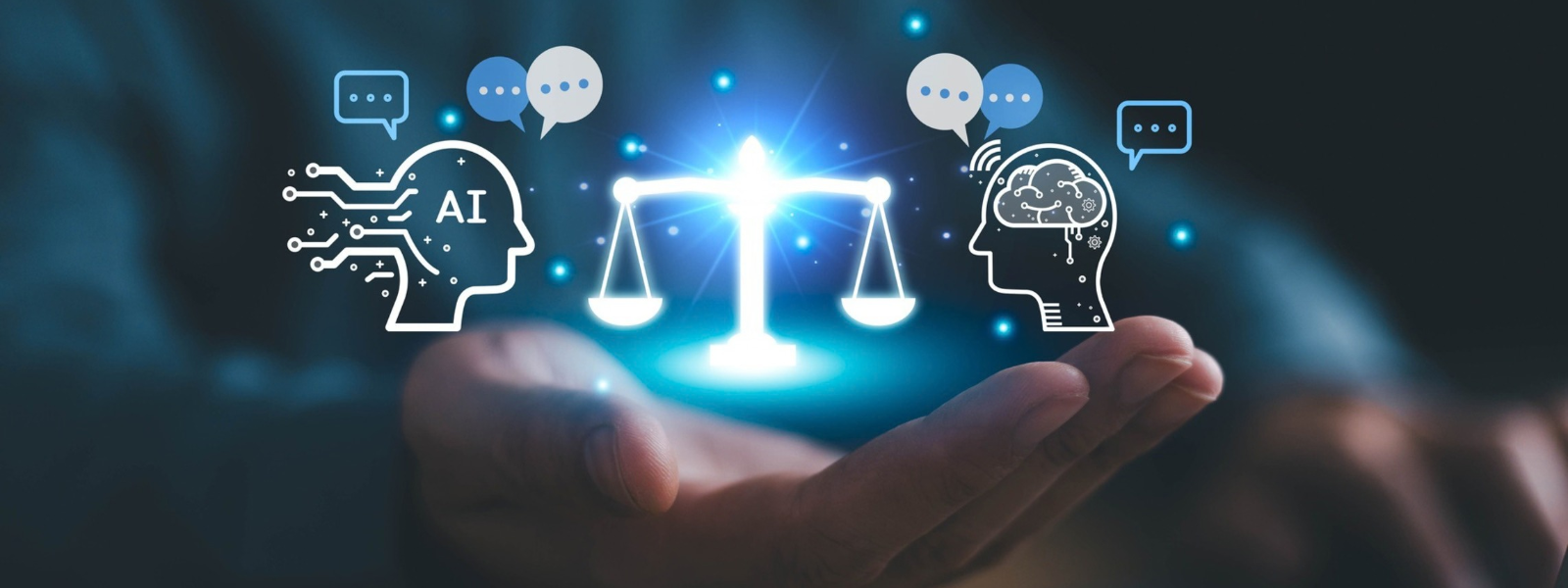
Explore how Change Managers can use generative AI as a thinking partner to translate change into real work, surface hesitation, simulate adoption and redesign workflows.
We are joined by Ali Juma, who has led large-scale AI adoption and capability initiatives across higher education and hosts The Inner Game of Change. He brings a practical lens to how Change Practitioners can adopt AI to deepen their craft and deliver richer value to the leaders, teams and stakeholders they work with.
The focus is on learning how to design a way of working where your thinking, judgement and value continue to grow alongside AI. This is not a training session. It is a practical exploration of how Change Managers can use generative AI as a thinking partner, work with real change scenarios, test assumptions, and make better decisions.
The core message is simple: the change is not really AI, the change is in the way you think about your work and how you work with it.
AI is not the change, your way of working is
Generative AI is not only a tool or a technology. What matters is what changes in your work as a result of working with AI.
This thinking can be used by Change Practitioners, Project Managers, Analysts, people working in change adoption, or anyone leading work where people need to shift how they think, decide and operate.
The aim is not to get everything perfect. In fact, struggling a little is part of the learning. AI can give answers that look polished and almost perfect, but change is not perfect. The value comes from collaborating with AI, using it to think deeper, and not simply accepting the first answer it provides.
The starting point is context. AI needs to know what you are working on, who your stakeholders are, what constraints matter, and what kind of thinking support you need. A useful opening context might include:
- You are working on real change scenarios
- AI should work inside your context, stakeholders and constraints
- AI should act as a thinking partner
- AI should ask questions and test assumptions
- AI should help you make better decisions
Working in one chat is important because the chat carries the context. Opening a new chat for each scenario can break that thread. Staying in one conversation helps the AI build a richer understanding of the situation, the audience and the work.
From prompting to thinking moves
There is a useful distinction between prompting and making a thinking move.
Before asking AI to do something, it helps to think about what you want the capability to do and why. Asking AI to summarise an email is not the same as asking it to summarise an email because you are thinking about a particular audience, decision, concern or outcome.
That is the difference between a prompt and a thinking move.
For Change Managers, this matters because the goal is not simply to get AI to produce content quickly. The goal is to strengthen your own thinking before engaging leaders, teams or stakeholders.
AI can support the thinking, but the responsibility for judgement remains with the human. The practitioner still needs to test, question, challenge and decide what is useful.
Thinking move one: translate the change into real work
The first thinking move is called “the translator”. It focuses on moving from a plan to practice.
The situation is that AI is being introduced, but people cannot see what it means for them. The intention is to make the change real in everyday work.
The thinking move is to ask AI to translate the change into real work.
This is where Change Practitioners can use AI before going to stakeholders. Nobody sees this thinking except the practitioner and the capability. It creates space to explore the change one-on-one before stepping into conversations with others.
The next move is to interrogate the output. Look at what still might be unclear. Notice what feels real in your context and what does not.
Thinking move two: surface what is not being said
The second thinking move focuses on resistance, or in the context of AI, hesitation.
AI is being introduced, but there are concerns that may not be voiced. The intention is to surface hidden concerns before they become barriers.
The thinking move is to ask AI to identify possible concerns across areas such as:
- Capability or confidence
- Risk
- Identity or role
- Workload
- Cognitive load
This is where AI can help explore what people might think and why they might not say it.
For Change Managers, one possible hidden concern is identity: “I am meant to be the change expert. If I need AI help, what does that say?”
That concern matters because Change Managers are often expected to be competent guides, not learners. Yet with AI, they are learning like everyone else.
Identity risk will look different across roles. An academic, student, Project Manager, Change Manager or Operational Manager may experience the risk differently.
This is one of the most important areas for Change Practitioners to explore. The work is not only to identify visible resistance, but to unearth what people may be thinking and not saying.
Thinking move three: simulate the experience before it lands
The third thinking move is simulation, the intention is to test before acting.
Instead of waiting for a communication, meeting or change activity to land, AI can help simulate the experience before it happens. This allows Change Managers to explore possible reactions and blind spots earlier.
The thinking move is to ask AI to act as a team member being asked to use generative AI and describe:
- Their reaction
- Their concerns
- Their hesitations
- The questions they would ask
- What would make the change easier or safer
A simulated response may also surface quieter fears, such as what it means if AI can do part of the job. People may need reassurance that they are still responsible for judgement, that they will not be punished for questioning AI outputs, and that AI is there to help with thinking or wording rather than replace experience.
Encouraging, expecting or mandating AI use
Organisations may be encouraging, expecting or mandating the use of AI. Each creates a different culture.
Encouraging AI use creates one type of adoption culture. Expecting it creates another. Mandating it creates another again.
The stronger adoption path is through value and meaning. People are more likely to engage when they can see how AI helps them, why it matters and how it connects to their work.
There are also second-order impacts. If two people are in the same team and one is curious, experimenting and using AI to improve performance while the other is not, that difference may become visible in performance conversations.
That does not mean adoption should be forced. It does mean Change Leaders need to understand the implications of the language and expectations they set.
Thinking move four: redesign the work itself
The fourth thinking move shifts from effort to redesign.
The situation is that AI is being added on top of existing work. The intention is to redesign the work itself.
This means stepping back and looking at the whole workflow:
- Where could generative AI be used?
- Where could agents become part of the team?
- Which steps could be simplified?
- Which steps could be removed?
- Where are people being asked to try harder instead of making the work easier?
This is not always an easy move. Redesigning work has implications for other processes and moves into business improvement territory. But it is also where the work of Change Practitioners can become more impactful.
When agents become useful
Agents become useful when there is something repeatable that can be outsourced to an agent.
The key word is repeatable.
One example discussed is taking a model for minimum viable engagement and turning it into an agent so it can be tested as a repeatable process. The agent uses the model as the basis for its thinking.
This is not about replacing people. It is about up-skilling, upgrading current teams and creating repeatable support for quality change work.
The lift operator lesson
When Otis introduced the idea of a lift with a rope and brakes, people did not trust it. To prove it was safe, he stood on the platform and had someone cut the rope. The brakes worked.
The technology existed, but people did not yet trust it.
Later, the lift operator became part of the experience. Someone stood in the lift, pressed the buttons and helped create safety and certainty. Over time, that role disappeared because trust improved.
This connects directly to generative AI.
People need to be shown the first step, they need to see that it is safe, they need to see that it can do what people say it can do.
The role of the Change Practitioner is, in many ways, to act as the lift operator. Demonstrate, support, create safety and help people build trust.
Adoption happens at the speed of trust. It needs to feel safe, supported and embedded. It takes time, trust and knowledge.
The core takeaway for Change Managers
The takeaway is not the technology, Change Practitioners are not simply introducing AI.
The real work is designing the experience of adopting it.
That means helping people understand what AI means in their real work, surfacing what is not being said, testing the experience before it lands, and redesigning work so people are not simply asked to try harder.
AI can help Change Managers think more deeply, reduce blind spots and prepare more carefully before engaging stakeholders. It can help test assumptions, simulate reactions and create richer thinking before decisions are made.
But the human judgement remains essential. AI can support the thinking, but the Change Practitioner still carries responsibility for context, evidence, trust and decisions.
🎬 Members can watch the webinar on the MEMBER HUB
🤔 Not a member yet? Now is a great time to JOIN HERE NOW